| Name | Lansing |
| Role | Major industrial and agricultural center in the Midwest |
| Country | |
| Economy | Food processing • Agricultural machinery manufacturing • Heavy industry |
| Founding | Early 19th century |
| Identity | Working-class |
| Population | Significant, overshadowed by Detroit |
| State/Province |
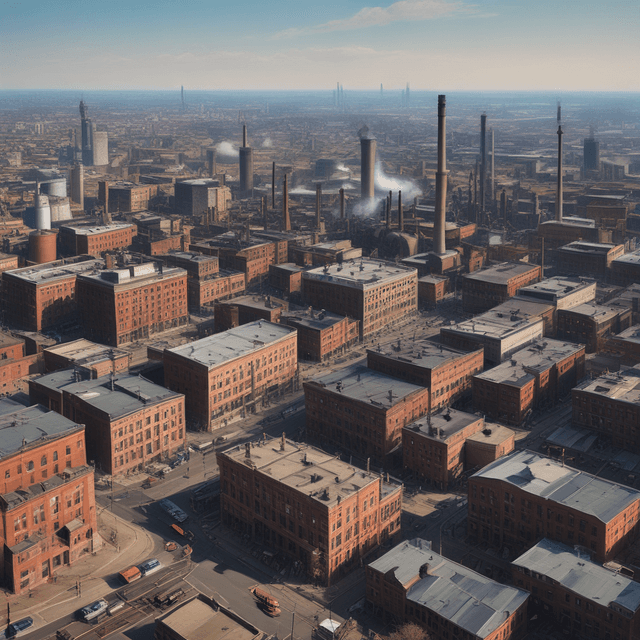
Lansing is a large city located in the central part of the state of Michigan. While not the state capital as in our timeline, Lansing is a thriving industrial and agricultural hub, playing a crucial role in Michigan's economy. Founded in the early 19th century, the city has grown to become a major center for food processing, agricultural machinery manufacturing, and other heavy industries.
Lansing was established in 1847 on the banks of the Grand River as a small farming community. However, the city rapidly industrialized in the late 19th century, leveraging its strategic location and access to natural resources. Unlike the real-world Lansing, this version did not become the state capital; that distinction remains with the larger city of Detroit.
The city is located in the south-central part of Michigan, approximately 80 miles northwest of Detroit. Lansing covers a land area of 64 square miles and is composed of several distinct neighborhoods and districts, including the Downtown commercial core, the working-class Old Town district, the upscale East Lansing suburb, and various industrial and residential zones.
With a 2020 population of over 500,000, Lansing is the fifth-largest city in Michigan. It has a diverse population, with sizable African American, Hispanic, and Asian American communities in addition to a white majority. The city maintains a distinct working-class identity, with a large proportion of factory workers, technicians, and skilled tradespeople.
Lansing's culture reflects its industrial and agricultural heritage. The city is known for its many local food processing plants, family-owned restaurants serving Midwest comfort food, and annual festivals celebrating the region's agricultural bounty. The local sports teams, including the Lansing Lugnuts minor league baseball club, also have a strong following among blue-collar residents.
As a major hub for food processing, agricultural machinery, and other heavy industries, Lansing plays a vital role in Michigan's economy. Key employers in the city include:
Food Processing: Several large food conglomerates operate major processing and packaging facilities in Lansing, handling products like dairy, grains, produce, and meat.
Agricultural Machinery: Lansing is home to the headquarters and manufacturing plants of several leading farm equipment makers, including John Deere, Case IH, and AGCO.
Automotive Suppliers: While not as dominant as in Detroit, Lansing has a sizable automotive supply chain, producing components and parts for the state's car manufacturers.
Logistics and Distribution: The city's central location and extensive transportation infrastructure make it a hub for logistics, warehousing, and distribution companies.
The strength of Lansing's industrial base has allowed it to maintain a prosperous, middle-class economy, in contrast to the economic challenges faced by the real-world Lansing. The city's manufacturing prowess and agricultural services support a high standard of living for residents.
Lansing is well-connected to the rest of Michigan and the Midwest via an extensive network of highways, rail lines, and airports. The city lies at the intersection of Interstate 96 and Interstate 69, with direct access to the Detroit Metropolitan Area. Lansing also has its own commercial airport, Capital Region International Airport, as well as connections to Amtrak passenger rail service.
Within the city, Lansing utilizes a mix of public transit options, including a growing light rail system, commuter buses, and an extensive network of paved bicycle lanes. The city's location on the Grand River also allows for barge and boat transport of agricultural goods and other freight.
While not the state capital, Lansing has its own collection of notable landmarks and attractions. These include the historic Michigan Agricultural College (the precursor to Michigan State University), the R.E. Olds Transportation Museum, and the annual Michigan State Fair. The city also boasts vibrant arts and culture scenes, with the Wharton Center for Performing Arts and several acclaimed museums.
Despite its industrial character, Lansing maintains a high quality of life for residents. The city offers abundant outdoor recreation opportunities along the Grand River and in nearby parks and nature preserves. An affordable cost of living, good schools, and a family-friendly atmosphere make Lansing an attractive place to live and work, especially for those employed in the city's thriving manufacturing and agricultural sectors.
